Which setup step was unclear?
Locate the unclear setup step without treating this questionnaire as proof that SurveyTeams supplies the integration.
Product and software research · Practical field guide
Identify confusing connection steps without collecting credentials.
Opens product registration. Example questions are not imported automatically.
YOUR DRAFTING BRIEF
Draft a questionnaire to help with this goal: Identify confusing connection steps without collecting credentials. Include neutral questions and allow people to skip situations they did not experience. Do not assume: Never request secret keys, tokens, or passwords in survey answers.
An example brief you can adapt. This preview does not call an AI service.
A useful starting point
Identify confusing connection steps without collecting credentials. Choose the questions that fit the experience you are investigating; avoid asking people to evaluate a step they did not encounter.
If nothing was unclear or difficult, say so. Skip questions about steps you did not experience; use not applicable where appropriate.
Locate the unclear setup step without treating this questionnaire as proof that SurveyTeams supplies the integration.
Check understanding of requested permissions without inviting the respondent to share credentials or access tokens.
Separate configuration completion from evidence that a test actually succeeded.
Ask what a successful check would look like so the product can provide an explicit confirmation.
Find a permission needing explanation; confusion alone does not establish that a permission is unnecessary or unsafe.
If nothing was unclear or difficult, say so. Skip questions about steps you did not experience; use not applicable where appropriate.

Which setup step was unclear?
Did you understand which permissions the connection requested?
What stopped you from confirming the integration worked?
What confirmation would show that the connection works?
Which permission needs a clearer explanation?
Download the questions as text ↓
Examples to adapt, rather than a validated research instrument.
Choose the response format
| Question | Suggested format | What to preserve |
|---|---|---|
| Which setup step was unclear? | Short open text | Locate the unclear setup step without treating this questionnaire as proof that SurveyTeams supplies the integration. |
| Did you understand which permissions the connection requested? | Short open text | Check understanding of requested permissions without inviting the respondent to share credentials or access tokens. |
| What stopped you from confirming the integration worked? | Short open text | Separate configuration completion from evidence that a test actually succeeded. |
| What confirmation would show that the connection works? | Short open text | Ask what a successful check would look like so the product can provide an explicit confirmation. |
| Which permission needs a clearer explanation? | Short open text | Find a permission needing explanation; confusion alone does not establish that a permission is unnecessary or unsafe. |
Make questions optional where appropriate. If you add a rating scale, label its endpoints, keep one idea per question, and retain a follow-up for reasons. These examples are not a validated measurement instrument.
Before you send it
Would you agree that integration setup feedback was a completely positive experience?
Which setup step was unclear?
The initial wording assumes a positive evaluation. The revised question asks about the actual situation so a respondent can describe difficulty, uncertainty, or a different experience.
Read the answers carefully
Never request secret keys, tokens, or passwords in survey answers.
Illustrative setup responses describe successful authorization but no evidence that the intended data arrived. This is an illustrative interpretation problem rather than a real customer result. Add a safe verification step that checks a real outcome without displaying secret values.
A worked interpretation example
Illustrative scenario. These are not customer results.
Illustrative setup responses describe successful authorization but no evidence that the intended data arrived.
Add a safe verification step that checks a real outcome without displaying secret values.
After testing the action, revisit this original observation: Illustrative setup responses describe successful authorization but no evidence that the intended data arrived. Repeat the relevant experience prompts with people who encountered the change. Compare specific explanations and sample differences; do not claim causation from the before-and-after responses.
From question to next step
Write down the decision you want this questionnaire to support: identify confusing connection steps without collecting credentials.
Invite people who experienced the relevant situation. Explain response handling and include an optional skip or not-applicable route. Never request secret keys, tokens, or passwords in survey answers.
Add a safe verification step that checks a real outcome without displaying secret values.
Before you send it
Identify confusing connection steps without collecting credentials. Start with one decision you can act on rather than using the survey to confirm a preferred answer.
Check understanding of requested permissions without inviting the respondent to share credentials or access tokens.
Add a safe verification step that checks a real outcome without displaying secret values. This is an example action to investigate, not a guaranteed improvement.
Ask after respondents have experienced the specific situation in the first prompt: “Which setup step was unclear?” Allow enough time after a proposed change for people to experience it before repeating the questionnaire.
After testing the action, revisit this original observation: Illustrative setup responses describe successful authorization but no evidence that the intended data arrived. Repeat the relevant experience prompts with people who encountered the change. Compare specific explanations and sample differences; do not claim causation from the before-and-after responses.
Copy the questions or download TXT, CSV, JSON, or a Markdown worksheet and adapt them in your own survey. The product CTA opens registration and does not import the example. Verify the features and terms available in your account.
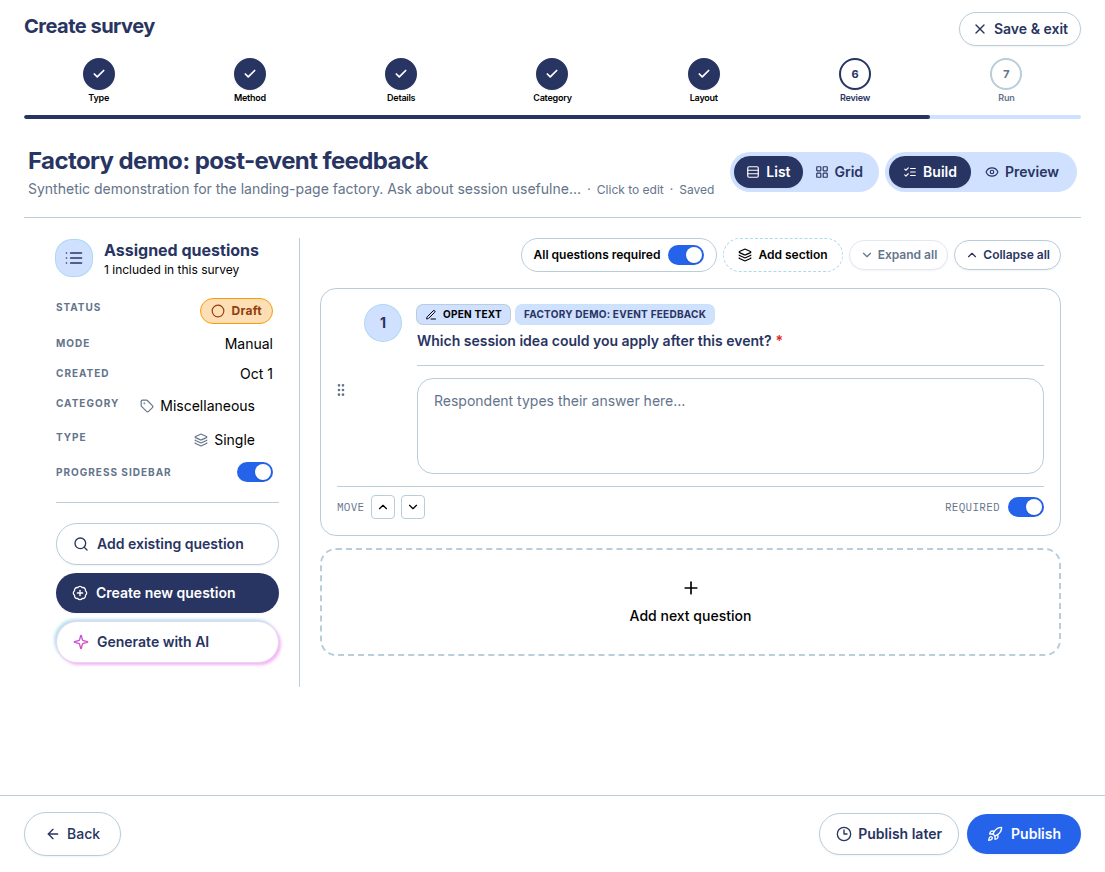
It shows a separate synthetic event-feedback example used to demonstrate the real builder. Copy or download the questions on this page and adapt them in your own draft. Registration does not import them automatically.
Inside the product
Build questions around an experienced task, keeping reports of difficulty separate from feature preferences. The actual product screenshot shows a separate synthetic post-event demonstration; the example questions on this page are not already loaded in the product.
Screenshots demonstrate creation and preview. Distribution and results are separate steps; availability varies by account and plan.
Build with SurveyTeams
Use these examples to draft your questionnaire. Create a survey draft, add questions, and check the respondent preview in SurveyTeams. Additional features depend on your account and plan.
Opens product registration. Example questions are not imported automatically.
Learn about the product ↗Continue exploring