Communities and membership / Survey guide

Communities and membership · A focused questionnaire

Community moderation appeal scope survey

Find missing explanations of the reason, evidence scope and possible outcomes before a community member decides whether to appeal moderation.

Opens product registration. Example questions are not imported automatically.

Editable examplesPractical guidanceNo-code starting point

CHOOSE YOUR STARTING QUESTIONS

Keep only prompts your respondents can answer. All questions remain available below.

3 questions selected. Nothing is submitted.

A useful starting point

Check what readers understand before they appeal.

Before deciding whether to appeal, a member needs to understand the moderation reason, what context the reviewer may consider, and what the review can change. Use a fictional case to test these explanations separately from the appeal form and submission receipt.

If nothing was unclear or difficult, say so. Skip questions about steps you did not experience; use not applicable where appropriate.

QUESTION 01

Which part of the moderation reason did you need explained before deciding whether to appeal?

Identify the missing rule or explanation needed to understand the decision, without collecting the disputed post or personal case details. This directs a policy-communication repair rather than judging the case.

QUESTION 02

How clear was what new context the reviewer could consider?

Check whether members understand the permitted review material and its limits. Preserve their interpretation of the instructions without asking them to submit actual appeal evidence through this feedback survey.

QUESTION 03

Which possible appeal outcome or review limitation was unclear?

Find assumptions about what the appeal can change or leave unchanged, then compare them with the actual policy. Clear limits matter before submission; they do not promise a favorable decision.

Download the questions as text ↓

Examples to adapt, rather than a validated research instrument.

Before you send it

Check what your wording assumes.

BEFORE / LEADING

Was your appeal easy to submit?

AFTER / CONTEXTUAL

Which possible appeal outcome or review limitation was unclear?

The question tests pre-submission policy comprehension, distinct from the marketplace-dispute guide's submission receipt and next-contact instructions.

Choose the response format

Make room for the explanation.

Suggested formats for this example questionnaire
QuestionSuggested formatWhat to preserve
Which part of the moderation reason did you need explained before deciding whether to appeal?Optional written explanation; none or not applicable acceptedIdentify the missing rule or explanation needed to understand the decision, without collecting the disputed post or personal case details. This directs a policy-communication repair rather than judging the case.
How clear was what new context the reviewer could consider?Optional written explanation; none or not applicable acceptedCheck whether members understand the permitted review material and its limits. Preserve their interpretation of the instructions without asking them to submit actual appeal evidence through this feedback survey.
Which possible appeal outcome or review limitation was unclear?Optional written explanation; none or not applicable acceptedFind assumptions about what the appeal can change or leave unchanged, then compare them with the actual policy. Clear limits matter before submission; they do not promise a favorable decision.

Make questions optional where appropriate. If you add a rating scale, label its endpoints, keep one idea per question, and retain a follow-up for reasons. These examples are not a validated measurement instrument.

From question to next step

Make the feedback useful.

01

Set the decision

Find missing explanations of the reason, evidence scope and possible outcomes before a community member decides whether to appeal moderation.

02

Invite relevant voices

Show the actual appeal policy and a fictional moderation case before any appeal is submitted. Ask about the decision explanation, permitted review material and possible outcomes without collecting a real case.

03

Choose an action

Explain the actual review scope, permitted context and available outcomes before the submission step, with links to the governing policy.

A worked interpretation example

From a comment to a practical next step.

Illustrative scenario. These are not customer results.

01 / OBSERVE

Keep the finding specific

In a synthetic community guide, appeal instructions emphasize the deadline but readers cannot tell whether new context will be considered or which outcomes are possible.

02 / INVESTIGATE

Choose an action to test

Explain the actual review scope, permitted context and available outcomes before the submission step, with links to the governing policy.

03 / FOLLOW UP

Check the experience again

Show the revised instructions with a fictional case and ask members to explain what the reviewer can consider and what the appeal cannot promise. Record remaining misunderstandings without evaluating a real moderation decision.

Read the answers carefully

What these answers cannot establish.

Do not collect disputed posts or identifying case details. Feedback does not determine fairness, replace the appeal process or guarantee an appeal outcome.

In a synthetic community guide, appeal instructions emphasize the deadline but readers cannot tell whether new context will be considered or which outcomes are possible. Do not collect disputed posts or identifying case details. Feedback does not determine fairness, replace the appeal process or guarantee an appeal outcome.

Before you send it

Questions, answered.

Who should receive this questionnaire?

Community members reading appeal instructions and policy owners testing explanations with fictional cases. Include only the steps each person encountered; voluntary responses do not establish a representative sample.

When should I ask these questions?

Show the actual appeal policy and a fictional moderation case before any appeal is submitted. Ask about the decision explanation, permitted review material and possible outcomes without collecting a real case.

What does “Which part of the moderation reason did you need explained before deciding whether to appeal?” help investigate?

Identify the missing rule or explanation needed to understand the decision, without collecting the disputed post or personal case details. This directs a policy-communication repair rather than judging the case.

What does “How clear was what new context the reviewer could consider?” help investigate?

Check whether members understand the permitted review material and its limits. Preserve their interpretation of the instructions without asking them to submit actual appeal evidence through this feedback survey.

What does “Which possible appeal outcome or review limitation was unclear?” help investigate?

Find assumptions about what the appeal can change or leave unchanged, then compare them with the actual policy. Clear limits matter before submission; they do not promise a favorable decision.

What would a practical follow-up look like?

Explain the actual review scope, permitted context and available outcomes before the submission step, with links to the governing policy. Show the revised instructions with a fictional case and ask members to explain what the reviewer can consider and what the appeal cannot promise. Record remaining misunderstandings without evaluating a real moderation decision.

Can I use the questions in SurveyTeams?

Copy the prompts or download TXT, CSV, JSON, or a Markdown worksheet, then adapt them in your own survey. The CTA opens registration; it does not import this example automatically. Verify available features in your account.
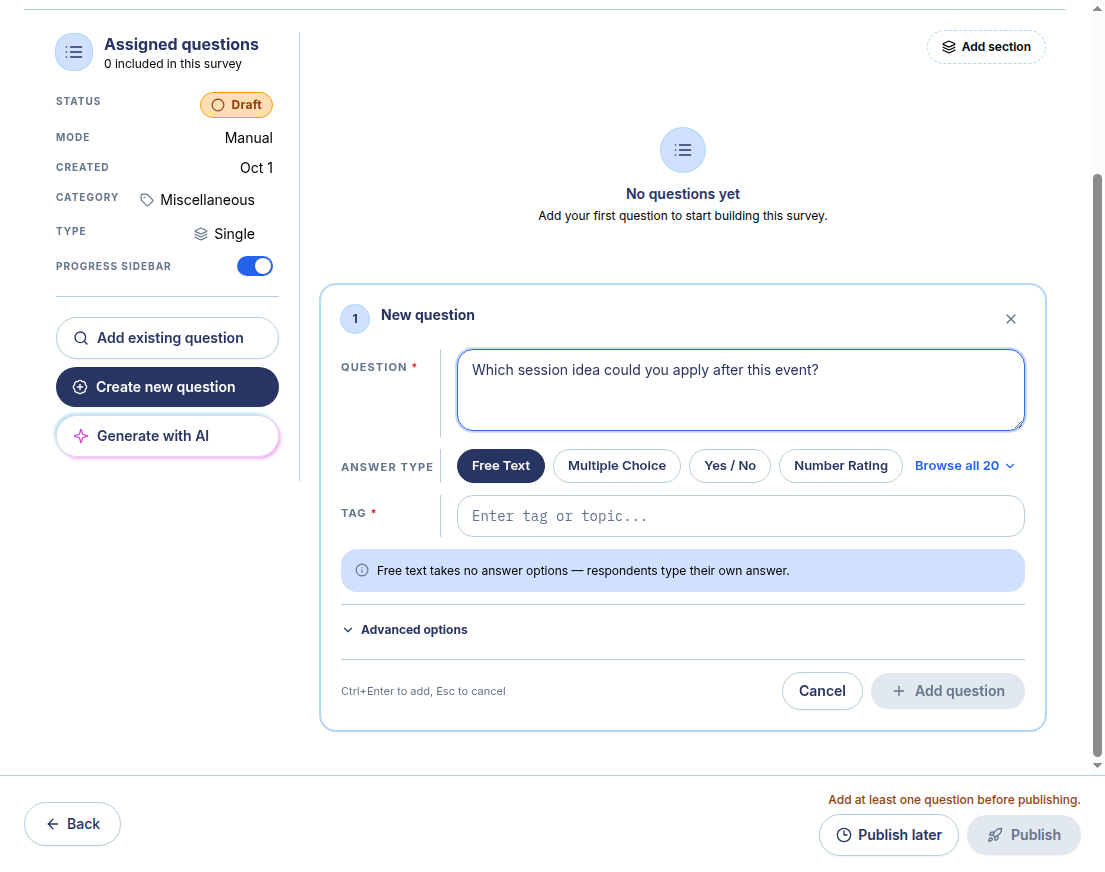
Inside the product

Create a manual draft and check the questions

The real SurveyTeams screenshot shows a separate labelled synthetic event survey. It demonstrates the manual builder, not this questionnaire already loaded and not the task described in the software being evaluated.

  1. Create a manual draft and explain its purpose: Find missing explanations of the reason, evidence scope and possible outcomes before a community member decides whether to appeal moderation.
  2. Copy or select only applicable questions from this page. Add them as optional text prompts; the download is an editorial definition, not a product importer.
  3. Check the respondent preview, allow none or not applicable, and apply this handling limit: Do not collect disputed posts or identifying case details. Feedback does not determine fairness, replace the appeal process or guarantee an appeal outcome.

Creation and preview were exercised in the observed account. Distribution, results and other features are separate workflows and depend on account conditions.

Question builder with a synthetic event feedback question and answer-type controls.
Write a free-text question. Actual SurveyTeams interface, captured 2026-10-01. Synthetic demonstration data where displayed.

Build with SurveyTeams

Draft your own community moderation appeal scope questionnaire.

Use these examples to draft your questionnaire. Create a survey draft, add questions, and check the respondent preview in SurveyTeams. Additional features depend on your account and plan.

Create your survey in SurveyTeams

Opens product registration. Example questions are not imported automatically.

Learn about the product ↗

Continue exploring

Related feedback guides.